


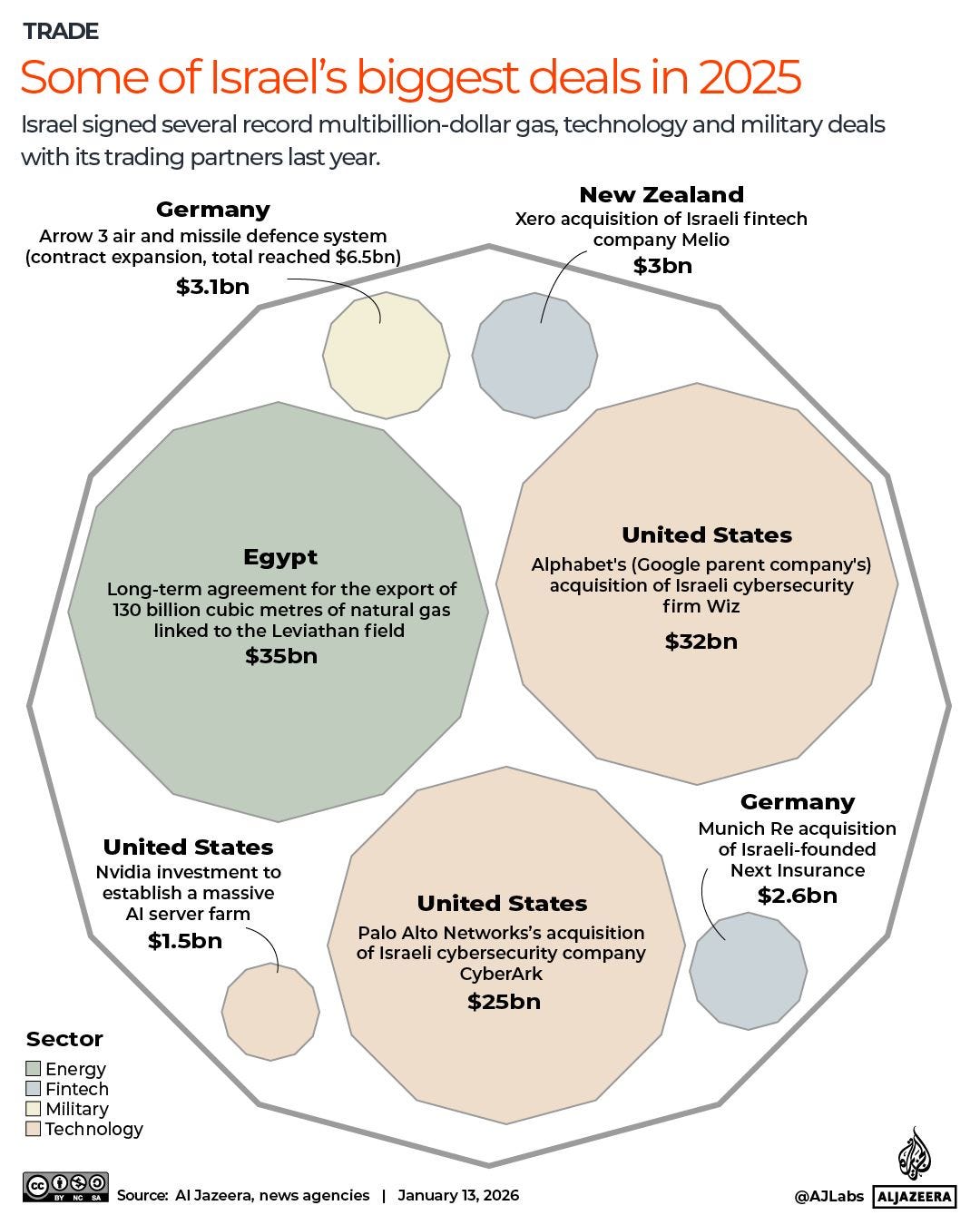
In 2024, Israel’s defence exports reached a record $14.7 billion, according to Israel’s Ministry of Defence. This number is only possible due to a global expansion of military technology and surveillance infrastructure that was, in significant part, developed and refined through Israel’s genocide in Gaza.
Gaza Was the Prototype; Iran Is the Launch
The Israeli military uses artificial intelligence to select bombing targets in Gaza. Two AI systems have drawn particular scrutiny. The first, known as Habsora or ‘the Gospel,’ is a machine-learning system that automatically reviews surveillance data to identify infrastructure and individuals, and then recommends targets to human analysts. According to retired Lieutenant General Aviv Kohavi, head of the IDF until 2023, the system could produce 100 bombing targets per day in Gaza, compared with roughly 50 per year through traditional human analysis. The second, known as Lavender, is an AI-powered database that flagged as many as 37,000 Palestinian men as potential targets.
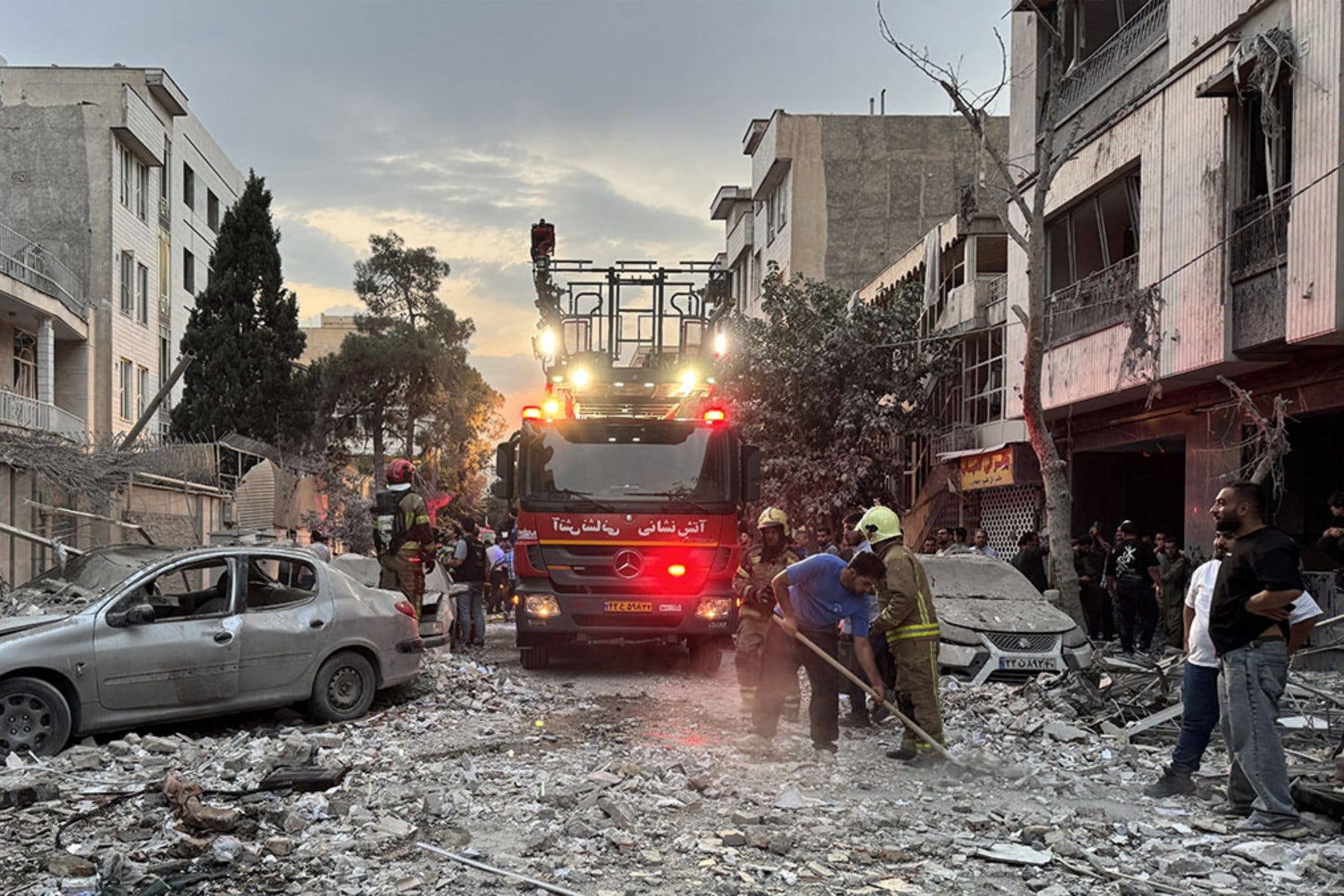
These systems and their underlying logic have now extended beyond Gaza. The Washington Post reported in March 2026 that Palantir’s Maven Smart System — which contains Anthropic’s Claude — helped U.S. commanders select 1,000 Iranian targets during the first 24 hours of the U.S.-Israeli war on Iran.
It appears Israel is using AI without any human oversight: a park in Tehran called ‘Police Park’ was struck. It’s a civilian recreation area that appears to have been misidentified by AI as a government target because of its name.
The ‘Gaza Doctrine’
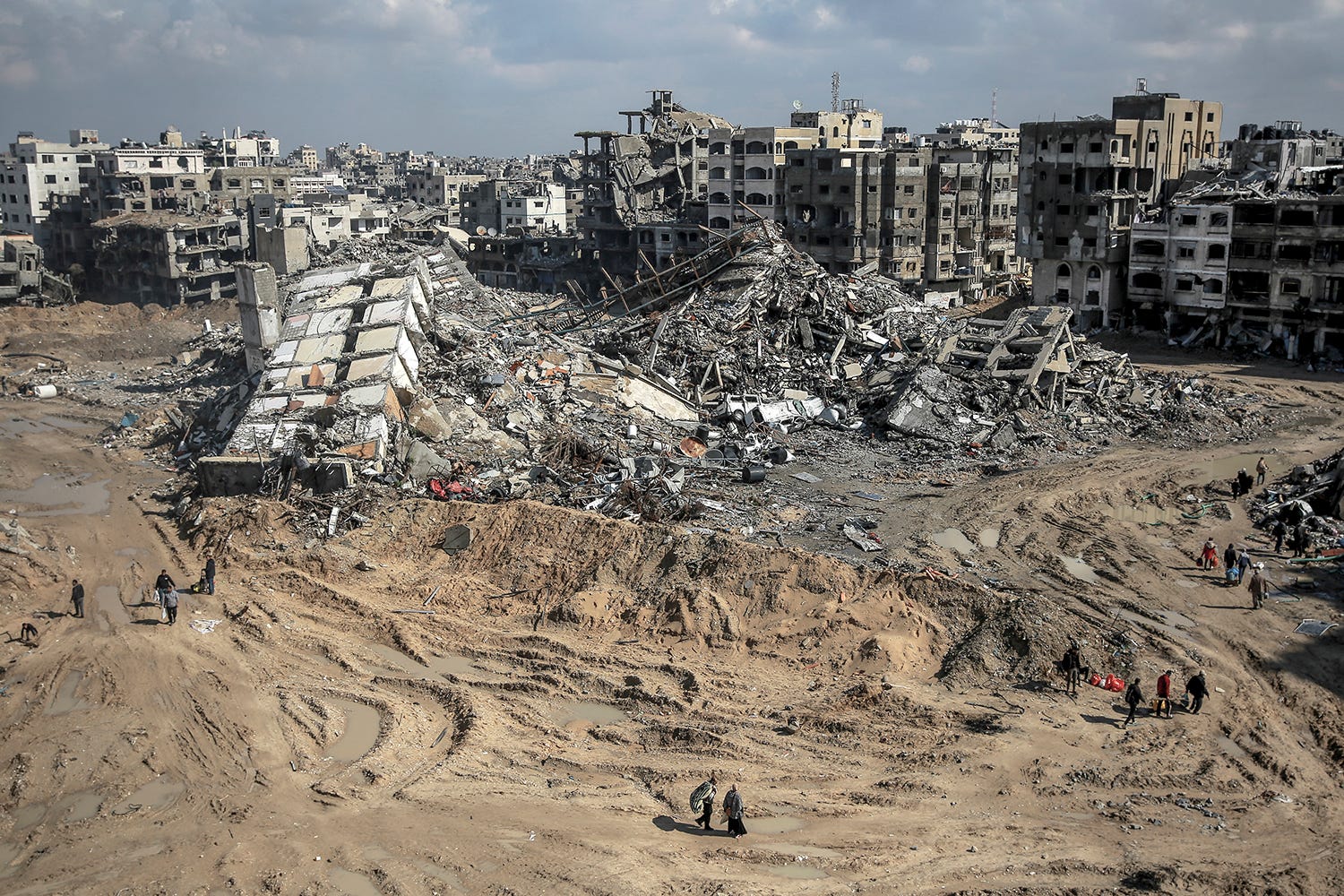
The military strategies being applied in Lebanon and Iran draw directly from the ‘Gaza doctrine’. Israeli President Isaac Herzog stated on October 12, 2023, that ‘it is an entire nation out there that is responsible.’ This meant the sustained, total destruction of civilian infrastructure. Analyst Faris Giacaman describes it as a war waged ‘against a society not only to subjugate it, but to destroy and prevent its conditions for life.’
The application of this doctrine to Lebanon and Iran has been explicit. In March 2026, Israeli Finance Minister Bezalel Smotrich visited the Lebanese border and declared that ‘very soon, Dahiya will look like Khan Younis.’ The Israeli military subsequently issued blanket evacuation orders for Beirut’s entire southern Dahiya district — home to over half a million people — and for all of southern Lebanon below the Litani River. Medical Aid for Palestinians’ CEO Steve Cutts described what was unfolding as ‘the unmistakable extension of the Israeli military playbook used in Gaza: collective punishment, forced displacement, and the deliberate terrorising of civilian populations.’
In Iran, Defence Minister Israel Katz described a ‘tornado plan’ to ‘destroy Tehran,’ including a strategy to level targets with ‘high visibility in a civilian environment.’ Double-tap strikes have been documented in all three theatres. In Gaza, such a strike on Nasser Hospital in August 2025 killed over 20 people. In Iran, a double-tap strike on the Minab girls’ school killed 168 schoolchildren. Three paramedics were killed in a double-tap strike in Tyre, Lebanon. Double-tap strikes constitute violations of international humanitarian law because they deliberately target rescue personnel.

The ICE–IDF Nexus
The connection between Israeli military practices and U.S. domestic law enforcement is institutional. Since the creation of Immigration and Customs Enforcement (ICE) and Customs and Border Protection (CBP) in 2003 — itself a product of the post-9/11 restructuring of the federal government — U.S. immigration officials have maintained a close and deliberate relationship with their Israeli counterparts. This collaboration has taken multiple forms: government-organised conferences with Israeli security officials, joint training sessions, grant funding for Israeli officers to conduct research on countering violent extremism, and privately funded trips that have ferried hundreds of senior American law enforcement officers to Israel.
ICE officials participated in at least eight trips to Israel organised by the Anti-Defamation League between 2013 and 2016, and a senior CBP official joined a trip organised by the Jewish Institute for National Security of America in 2018. An itinerary from a 2016 ADL delegation included meetings with Israeli officials at a prison facility in Hebron, a segregated city in the occupied West Bank. ICE officers have regularly trained alongside Israeli police at Israel’s National Urban Training Center.
ICE has purchased phone-hacking tools from Israeli firms Cellebrite and Paragon Solutions. Cellebrite’s software can bypass passwords and security protocols on smartphones and computers, while Paragon’s enables remote phone infiltration. Through this surveillance ‘dragnet,’ field agents are now equipped with iris scanners, facial recognition software, and license plate readers. Palantir works simultaneously with both the IDF and ICE, creating a shared technological infrastructure. Since 2015, the Binational Industrial Research and Development (BIRD) Program has brought together DHS and Israel’s Ministry of National Security to jointly develop ‘advanced technologies for homeland security needs.’
The operational parallels became starkly visible in Minneapolis, where thousands of federal law enforcement officers were deployed. Videos showed officers jumping from unmarked vans, pepper-spraying protesters, and breaking car windows.
Josh Paul, who previously led the arms transfer office at the State Department, observed ‘striking parallels’ with the occupied West Bank: ‘You have units of a security force that are imposed on the local authorities…that engage in checkpoints, detentions, including of children…And it seems to operate broadly with impunity.’
The ‘Israel Model’ in Kashmir
India is the world’s largest arms importer and Israel’s most significant Asian defence customer. Israel has sold approximately $3 billion of Israel Aerospace Industries technology alone, including the Barak 8 air defence system, Harop and Harpy loitering munitions, Hermes 450 and 900 UAVs, Heron surveillance drones, and Rafael’s Spike anti-tank missiles. During the May 2025 escalation between India and Pakistan in Kashmir, India reportedly deployed dozens of Harop drones.
In 2019, WhatsApp revealed that the NSO Group’s Pegasus spyware had been used to target journalists and human rights activists in India. The Pegasus Project investigation in 2021 identified India as one of 11 countries that were NSO Group clients, with over 300 Indian phone numbers on a leaked list of potential targets. The Financial Times subsequently reported that Israeli firms Cognyte and Septier supply surveillance systems installed at subsea cable landing stations in India, enabling monitoring of communications across the population.
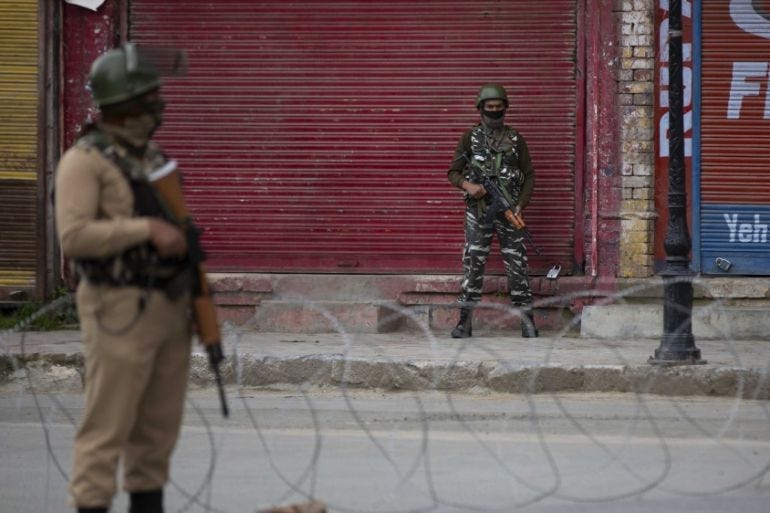
In November 2019, India’s then-consul general in New York, Sandeep Chakravorty, was recorded stating, with reference to Israeli settlements in occupied Palestinian territory and the resettlement of Kashmiri Hindus: ‘If the Israeli people can do it, we can also do it.’ Following the Pahalgam attack in Indian-occupied Kashmir in April 2025, Indian television anchors openly invoked Israel, with one declaring ‘April 22 is to India what October 7 was to the Israelis’ and a guest demanding ‘We demand we turn Pakistan into Gaza.’ India’s approach to Kashmir since 2019 parallels Israel’s treatment of the West Bank, including the militarisation, population management, checkpoints, communication blackouts, and the use of extraordinary legal powers to shape everyday life.
Several BJP-ruled states have pursued a policy of ‘bulldozer justice’: authorities have demolished homes and mosques of Muslims, without legal notices. This mirrors Israel’s longstanding practice of demolishing Palestinian homes in the West Bank and East Jerusalem.
Siddharth Varadarajan, co-founder of The Wire, one of the journalists targeted by Pegasus, described the broader dynamic in direct terms: ‘Methods that the Israelis use against occupied people are being used by the Modi government against its own citizens.’
Israeli Surveillance in British Policing
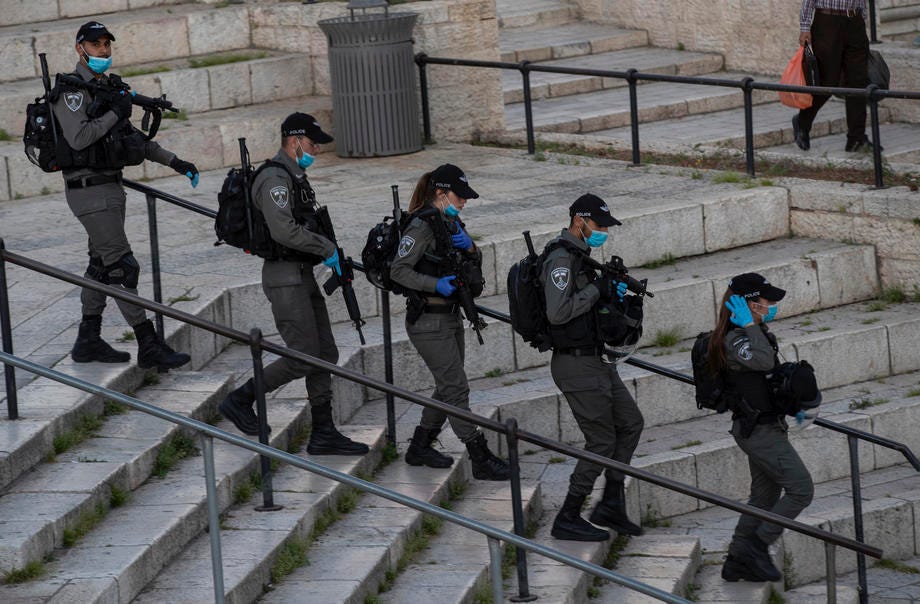
The U.K. has adopted Israeli surveillance technology, despite the U.K. government’s public criticism of Israeli actions in Gaza and the West Bank. Three Israeli-linked companies have secured significant contracts with U.K. law enforcement.
Corsight AI, an Israeli facial recognition company, was subcontracted by UK firm Digital Barriers to provide AI-powered software for the Home Office’s nationwide rollout of facial recognition surveillance vans. The programme is valued at approximately £20 million. Corsight’s technology was deployed in Gaza by Unit 8200, Israel’s cyber-intelligence division. However, misgivings about its accuracy, including the wrongful arrest and detention of hundreds of Palestinians, led Israeli security officials to express doubts.
Cellebrite, an Israeli company with close military ties, has contracts with multiple U.K. police forces. City of London Police renewed its contract for over £95,000, Leicestershire Police for approximately £328,000, and additional contracts exist with British Transport Police, the Serious Fraud Office, Kent and Essex Police, and Northumbria Police. Cellebrite’s phone-unlocking and data extraction tools have been used extensively by the Israeli military on detained Palestinians. Rights groups have documented the company’s export of the same technology to Myanmar, Serbia, and Belarus, where it has been used against opposition figures, journalists, and activists.
BriefCam, an Israeli-founded AI video surveillance company, has been supplying video analytics software to Cumbria Police since at least 2022. The software creates searchable summaries of CCTV footage using facial recognition, licence plate identification, and behavioural pattern analysis. BriefCam’s technology has been used in occupied East Jerusalem. In Glasgow, surveillance systems developed by graduates of Israel’s Unit 8200 and linked to Israeli arms company Elbit Systems have been operating since at least 2013, including what has been described as the most intrusive facial and emotional recognition system used by police anywhere in Europe.
The Global Reach
Surveillance and military technologies are developed within Israel’s military-intelligence complex, refined through deployment against Palestinians, marketed internationally as ‘battle-tested’ and ‘field-proven,’ and then exported to governments that frequently use them against their own domestic populations.
Citizen Lab identified Pegasus spyware infections in 45 countries between 2016 and 2018, operated by at least 33 distinct NSO Group clients. At least six of those countries — Bahrain, Kazakhstan, Mexico, Morocco, Saudi Arabia, and the UAE — were linked to using the spyware to target civil society. Israel has used Pegasus sales as diplomatic leverage, with a New York Times investigation documenting how spyware sales to Azerbaijan, Morocco, the UAE, and Saudi Arabia coincided with those governments’ increased diplomatic support for Israel — a pattern that facilitated the Abraham Accords.
In Mexico, Pegasus was deployed against journalists investigating cartel-government ties. In Saudi Arabia, it was used to surveil Washington Post journalist Jamal Khashoggi in the months preceding his murder and dismemberment in the Saudi consulate in Istanbul. In Indonesia, at least four Israeli-linked firms sold invasive spyware through intermediary companies in Singapore. In Azerbaijan, IAI’s Harop drones were deployed in the Nagorno-Karabakh conflict. In Hungary, the Orbán government used Pegasus against journalists and opposition figures. Cellebrite’s technology was exported to Myanmar’s military junta and to Serbia, where it was used against opposition activists. In Greece, Israeli technology has been used to monitor refugees and migrants at borders.
Journalist Antony Loewenstein documents that Israel has sold its repression and surveillance technology to over 130 nations, with many purchases motivated precisely by how the technology performs in the occupied territories.
The Structure of the Pipeline
At its core is Israel’s military-intelligence apparatus, most prominently Unit 8200 that functions as an incubator for the country’s private surveillance industry. Veterans of Unit 8200 have founded over 1,000 companies. The unit also generates the human capital, technical knowledge, and institutional networks that populate Israel’s private cyber-surveillance sector.
The second stage is the testing environment. Palestinian territories, particularly Gaza and the West Bank, are an ‘open-air laboratory’ for weapons and surveillance technology. Facial recognition is deployed at checkpoints. AI targeting systems select which buildings to bomb and which people to kill. Spyware monitors the phones and communications of an entire population. Drones maintain constant surveillance.
The third stage is the marketing. Israeli defence firms and the Ministry of Defence explicitly market products as ‘battle-tested’ and ‘combat-proven.’ A senior defence official told Breaking Defense that record sales reflect ‘more than anything else the growing global appreciation for Israeli technology’s proven capabilities.’
The fourth stage is global export, facilitated by Israel’s Defence Export Control Agency. The agency operates with minimal transparency; it does not disclose export approvals even to the Israeli Knesset. When international restrictions are imposed, Israeli-linked firms have circumvented them by operating through shell companies in countries like Singapore and Cyprus.
The fifth and final stage is normalization. The international failure to hold Israel accountable for its genocide has set a precedent. Impunity is part of the product. Governments purchase Israeli systems not despite how they were tested, but precisely because of it. Lack of accountability in Palestine becomes the precondition for the erosion of rights elsewhere: what is tolerated in Gaza normalizes what becomes possible in Minneapolis, Kashmir, Glasgow, and Tehran.